$13.37
Oral Alcohol Deterrent
Product Information
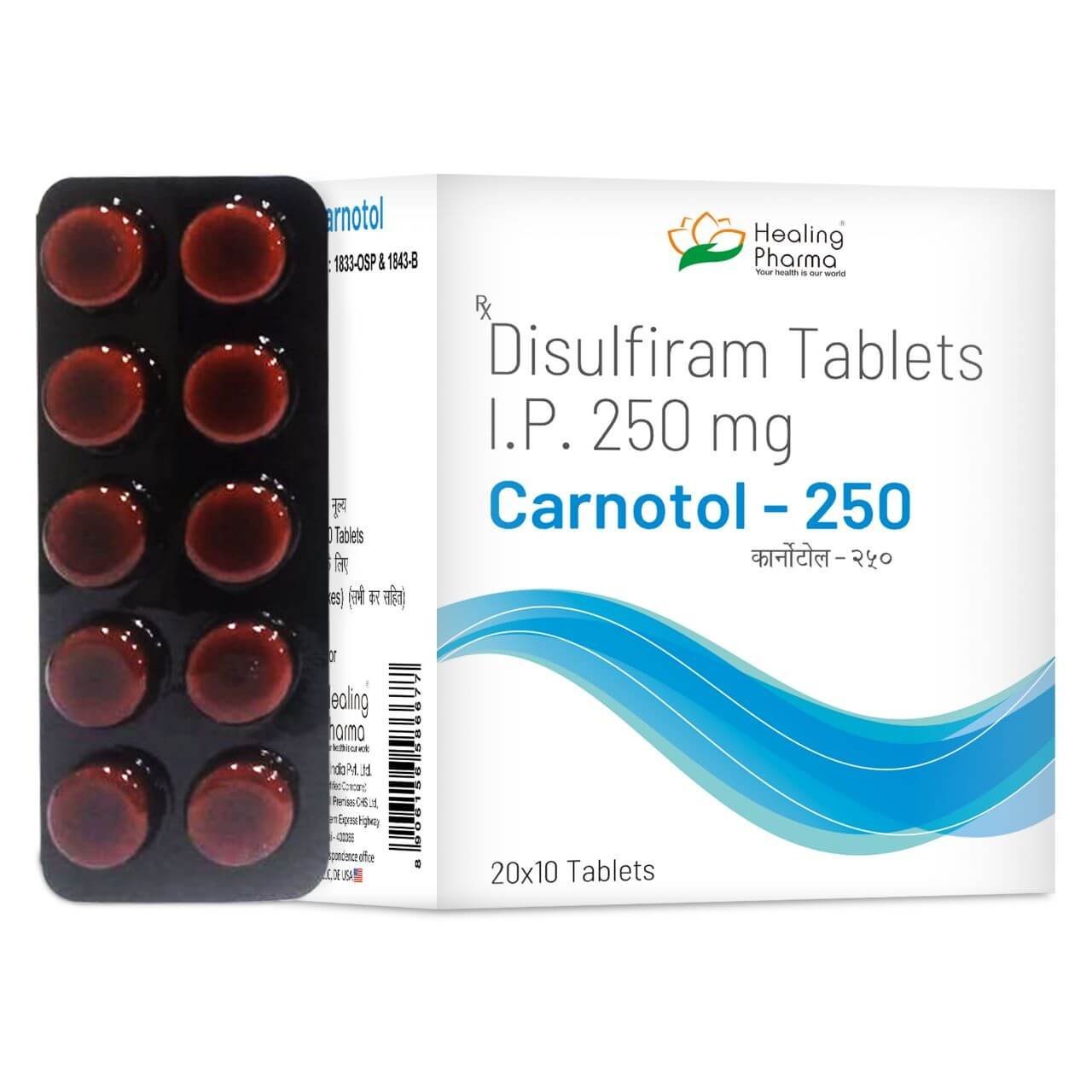
CARNOTOL (Disulfiram) is a medicine used in the management of chronic alcoholism. It works by causing unpleasant physical and mental effects when alcohol is consumed, discouraging further drinking. Disulfiram is not a cure for alcoholism but is an important aid in long-term treatment plans that include counseling and support.
Why is this Medication Prescribed?
- Disulfiram is prescribed to help treat chronic alcoholism.
- It works by creating an intense sensitivity to alcohol, leading to uncomfortable effects such as:
- Flushing of the face
- Headache
- Nausea and vomiting
- Chest pain
- Weakness
- Blurred vision
- Mental confusion
- Sweating
- Choking or difficulty breathing
- Anxiety
These reactions typically begin within 10 minutes of alcohol consumption and may last 1 hour or longer.
⚠️ Important: This medicine does not cure alcoholism, but it discourages drinking by creating these effects.
Uses
- Management of chronic alcoholism.
Benefits
- Helps patients abstain from alcohol by creating deterrent reactions.
- Supports long-term treatment plans when combined with counseling and therapy.
How Should this Medicine be Used?
- Take CARNOTOL (Disulfiram) once daily by mouth, as directed by your doctor.
- Follow the instructions on your prescription label carefully.
- Do not take more or less than prescribed.
- Tablets may be swallowed whole. If you cannot swallow them:
- Crush and mix with water, coffee, tea, milk, soft drinks, or fruit juice.
- Continue taking regularly unless your doctor advises otherwise.
Other Uses
In some cases, disulfiram has been studied for other medical purposes (such as experimental treatment in Lyme disease). Ask your doctor or pharmacist for more information if applicable.
⚠️ Alcohol Interaction Warning
Do not consume any alcohol while taking CARNOTOL (Disulfiram), for at least 12 hours before your first dose, during treatment, and for up to several weeks after stopping.
Even small amounts of alcohol (from beverages, sauces, vinegars, medications, or cough syrups) can cause a severe reaction including flushing, nausea, chest pain, confusion, and difficulty breathing.
Avoid all foods, drinks, and medicines containing alcohol.
Special Precautions
Before taking CARNOTOL (Disulfiram):
- Tell your doctor if you are allergic to disulfiram or any other medicines.
- Inform your doctor of all medications you are taking, especially:
- Amitriptyline (Elavil)
- Anticoagulants (blood thinners, e.g., Warfarin/Coumadin)
- Isoniazid
- Metronidazole (Flagyl)
- Phenytoin (Dilantin)
- Any nonprescription drugs, vitamins, or remedies that may contain alcohol.
- Tell your doctor if you have or have ever had:
- Diabetes
- Thyroid disease
- Epilepsy or seizures
- Brain damage
- Liver or kidney disease
- If you are pregnant, planning pregnancy, or breastfeeding, consult your doctor.
- Inform your doctor or dentist before any surgery, including dental procedures.
- This medicine may cause drowsiness. Do not drive or operate machinery until you know how it affects you.
Possible Side Effects
Common reactions when combined with alcohol:
- Flushing, headache, chest pain
- Nausea, vomiting, sweating, anxiety
- Difficulty breathing, blurred vision, mental confusion
Other possible side effects (even without alcohol):
- Drowsiness or tiredness
- Skin rash or acne
- Headache
- Metallic or garlic-like taste in the mouth
Seek medical help immediately if you develop severe allergic reactions, liver problems (jaundice, dark urine), or neurological symptoms.
Storage & Disposal
- Store at room temperature, away from heat, moisture, and direct light.
- Keep tightly closed and out of reach of children.
- Do not use expired tablets.
- Dispose of unused medicine safely—consult your pharmacist for proper disposal methods.
Emergency Guidance
- In case of alcohol consumption while on disulfiram, seek emergency medical help immediately if reactions are severe or prolonged.
- If you experience trouble breathing, chest pain, severe confusion, or loss of consciousness, call emergency services.
- In case of overdose, contact your local poison control center or go to the nearest emergency room right away.