$13.37

Oral Antimalarial

Product Information

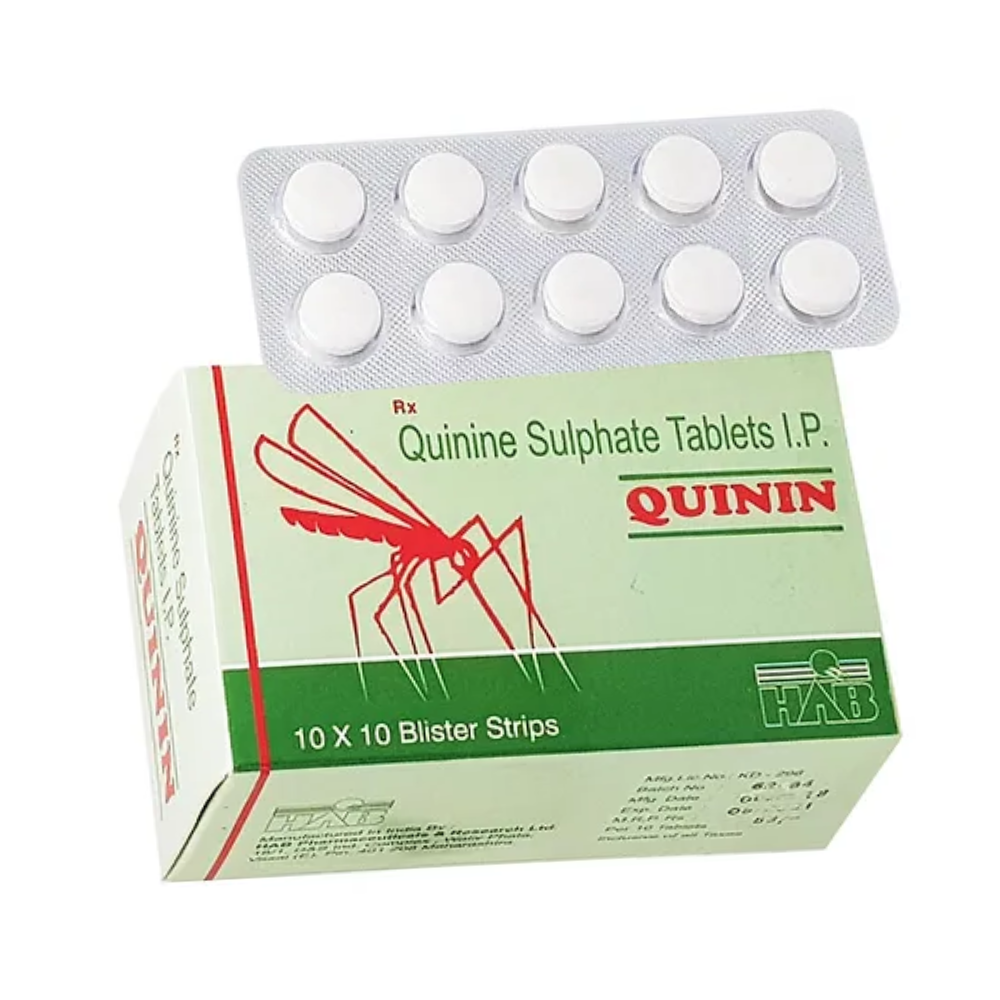
Quinin (Quinine sulphate) is used in the treatment of malaria. It may be administered alone (monotherapy) or with other medications. Quinine works by attacking and eliminating malarial parasites inside red blood cells. It causes accumulation of toxic heme pigment, which kills the parasite.

This medicine is considered effective in areas where chloroquine resistance occurs.

  • Important: Quinine is only for the treatment of malaria once infection has occurred.

  • It is not safe or effective for malaria prevention (prophylaxis).

Why is this Medication Prescribed?

Quinin is prescribed to treat malaria infections, particularly in areas where chloroquine-resistant malaria is common.

Uses

  • Treatment of malaria caused by Plasmodium species

  • May be used with other antimalarials for combination therapy in resistant cases

Benefits

  • Kills malaria parasites in red blood cells

  • Effective in areas with chloroquine resistance

  • Helps reduce malaria-related symptoms such as fever and chills

How Should this Medicine be Used?

  • Take exactly as prescribed by your doctor.

  • May be given alone or with other antimalarials.

  • Complete the full course, even if symptoms improve.

  • Not to be used for preventing malaria before travel.

Other Uses

Currently, Quinin (Quinine sulphate) is not recommended for other purposes.

⚠️ Pregnancy & Birth Defect Risk Warning

This medicine may cause serious harm to an unborn baby, including birth defects or pregnancy loss.

  • Do not take this medicine if you are pregnant or planning a pregnancy, unless prescribed by your doctor as the only available option.

  • Use effective contraception during treatment.

  • If you become pregnant while taking this medicine, stop it immediately and contact your doctor.

⚠️ Heart Rhythm Risk Warning

This medicine may cause abnormal heart rhythms (QT prolongation), which can be serious.

  • Tell your doctor if you have heart disease, low potassium or magnesium, or a family history of sudden cardiac death.

  • Report palpitations, fainting, or dizziness immediately.

Special Precautions

  • Inform your doctor if you have kidney or liver disease.

  • Use with caution in patients with blood disorders or heart rhythm problems.

  • May not be suitable for patients with eye or hearing disorders.

  • Avoid combining with other medicines that prolong the QT interval.

  • Not recommended during pregnancy unless no safer alternatives are available.

  • Use with caution when breastfeeding.

Possible Side Effects

Common side effects may include:

  • Nausea, vomiting, abdominal pain

  • Headache, dizziness, vertigo

  • Sweating, restlessness

  • Ringing or buzzing in the ears (tinnitus)

  • Changes in color vision or blurred vision

  • Flushing or redness of the face

  • Altered heart rate

Seek medical help if severe side effects occur.
Storage & Disposal

  • Store in a cool, dry place away from moisture and direct light.

  • Keep out of reach of children.

  • Do not use expired medicine.

  • Dispose of unused tablets according to pharmacist instructions.

Emergency Guidance

  • Overdose: May cause severe heart rhythm problems, seizures, or blindness. Seek emergency medical help immediately.

  • Severe reaction: If you develop allergic symptoms, difficulty breathing, chest pain, or loss of consciousness, call emergency services.

  • Missed dose: Take it as soon as remembered unless it is nearly time for the next dose. Do not double dose.
Reference #18.937a7b5c.1766158466.52d0b7d
https://errors.edgesuite.net/18.937a7b5c.1766158466.52d0b7d